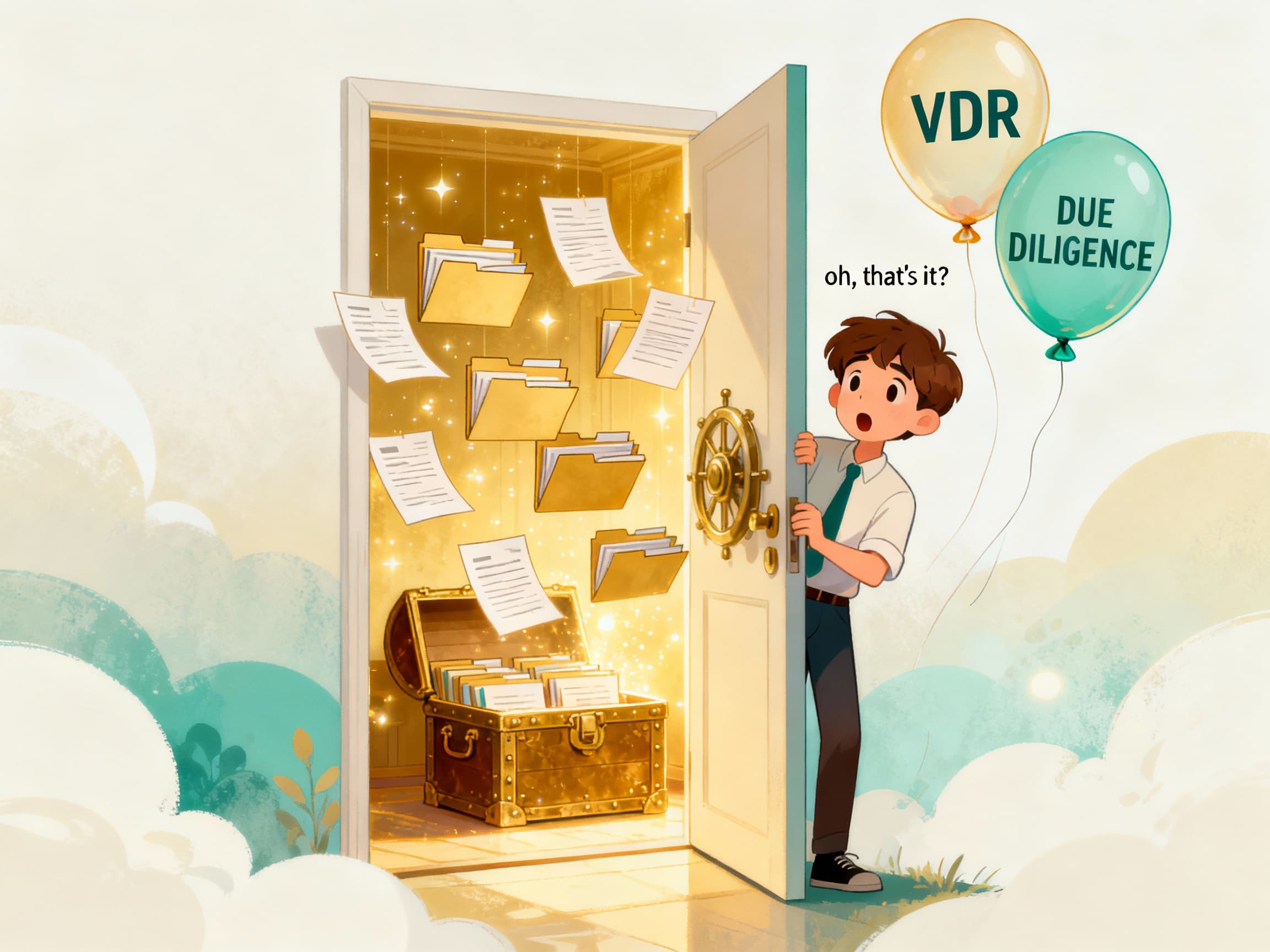
What Is a Data Room? A Guide for Early-Stage Founders
You're preparing to raise your pre-seed or seed round. You've polished your pitch deck, rehearsed your story, and started reaching out to investors. Then someone asks: "Can you send me access to your data room?"
If that question made you panic—or quietly Google "what is a data room"—you're not alone. The term sounds intimidating, like something reserved for billion-dollar M&A deals with armies of lawyers. But here's the truth: a data room for pre-seed and seed stage startups is much simpler than you think, and setting one up takes minutes, not days.
This guide explains what a data room actually is, why investors ask for one, and how to set yours up without overcomplicating things or overspending. If you're a first-time founder raising your earliest rounds, this is for you.
What Is a Data Room?
A data room—sometimes called a virtual data room (VDR) or investor data room—is a secure file sharing platform where you store and share confidential business documents with investors, advisors, or potential acquirers. Unlike generic document management tools, it comes with three key differences from regular file sharing. (Not sure if you need one yet? Check out our guide on whether you need a data room based on your stage.)
- Access control: You decide exactly who can view, download, or print each document.
- Analytics: You can see who opened your documents, which pages they viewed, and how long they spent on each.
- Security: Features like encryption, watermarking, link expiration, and download restrictions help protect sensitive information.
The term "data room" originated in the pre-internet era when M&A deals required physical rooms filled with filing cabinets. Buyers would fly in, sign NDAs, and spend days reviewing paper documents. Virtual data rooms digitized this process, but much of the industry still builds products as if every deal is a $500 million acquisition. For pre-seed and seed founders raising your first rounds, that level of complexity is massive overkill.
Why Your Data Room Matters More Than You Think
Here's something most first-time founders don't realize: investors are evaluating you from the moment you share your first document. Your data room isn't just a folder—it's a signal. A well-organized data room tells investors you're thoughtful, detail-oriented, and ready for the scrutiny that comes with their money. A messy one raises red flags before you even get to the pitch.
Consider what goes through an investor's mind when they click your link:
- Disorganized folders? "If they can't organize documents, how will they manage a company?"
- Missing documents? "What else haven't they thought through?"
- Generic Google Drive link? "Are they serious about this raise?"
One VC told us bluntly: "A messy data room makes me wonder what else is messy. A clean one tells me the founder has their act together. It's one of the first real tests of operational competence." At the pre-seed and seed stage, you don't have years of revenue or a proven track record. Investors are betting on you — your judgment, your attention to detail, your ability to execute. Your data room is one of the first concrete examples of how you operate. Make it count.
Why "Virtual Data Room" Sounds Scarier Than It Is
If you search for "virtual data room," you'll find enterprise data room software with pricing that starts at $5,000+ and feature lists that include AI-powered redaction, 16-level permission hierarchies, SOC 2 Type II certification, ISO 27001 compliance, and Q&A workflow management. These tools exist for a reason—complex M&A transactions, IPO preparations, and legal due diligence genuinely require them. But that's not your situation as a pre-seed or seed founder.
When a seed investor asks for your "data room," they're not expecting a fortress. They want:
- A clean, organized place to review your documents
- Easy access without jumping through hoops
- Confidence that you've thought through your business
The bar is achievable—but it's not zero. A well-organized data room signals professionalism and preparedness. A sloppy one signals the opposite. You don't need enterprise features, but you do need to look like you know what you're doing.
Data Room vs. Google Drive: What's the Difference?
Can you just use Google Drive or Dropbox as your data room? Technically, yes. Many early-stage founders try. But there are meaningful trade-offs—and some of them can cost you investor interest without you ever knowing. (For a deeper dive into this comparison, see our complete data room comparison guide.)
| Feature | Google Drive / Dropbox | Purpose-Built Data Room | Why It Matters |
|---|---|---|---|
| Analytics | None or very basic | Page-level tracking, time spent, activity logs | Know which investors are actually interested |
| Access Control | Basic (view/edit) | Granular permissions, link expiration | Revoke access instantly if needed |
| Document Organization | Manual (you figure it out) | Predefined structure, AI-organized folders | Look professional without guessing what goes where |
| Document Checklist | None | Complete checklist of what investors expect | Never miss a critical document |
| Professional Appearance | Generic link, cluttered interface | Clean, investor-ready presentation | First impressions matter—investors are judging |
| Price | Free | Free to $99/month (most VDRs: $250-500+/mo) | Solutions built for pre-seed/seed are affordable |
The biggest gap is analytics. When you share a Google Drive folder, you have no idea whether an investor actually looked at your deck or just glanced at the link and moved on. With a proper data room, you know exactly who viewed what, when, and for how long. That intelligence helps you prioritize follow-ups and understand which investors are genuinely engaged versus politely ignoring you.
The second gap is structure. First-time founders often don't know what documents investors expect or how to organize them. A good data room solves this with predefined folder structures and document checklists—so you're not guessing.
What Investors Expect in a Startup Data Room
Investor expectations vary by stage. At pre-seed and seed, the bar is achievable—but it's still a test of your competence:
| Stage | What Investors Expect | Data Room Complexity |
|---|---|---|
| Pre-Seed | Pitch deck, basic financials (if any), cap table, incorporation docs | Clean, organized folder—shows you're serious |
| Seed | Above + product demo/screenshots, team bios, early traction data | Organized data room with analytics—this is your standard |
| Series A | Detailed financials, customer contracts, legal docs, HR info | Full data room with granular permissions |
| Series B+ | Everything above + audited financials, compliance docs | Enterprise-grade VDR may be needed |
Notice the pattern: complexity scales with stage. Pre-seed and seed investors know you're early—they're not expecting a perfectly organized war room. But they are expecting you to be organized, thoughtful, and prepared. Your data room is evidence of whether you are.
When Do Startup Founders Need a Data Room?
You might be wondering: do I need a data room right now, or can I wait? Set up a data room when:
- You're actively fundraising your seed round and sharing documents with multiple angel investors or venture capital firms
- An investor has expressed serious interest and asked for due diligence materials
- You're sharing sensitive information (financials, SAFE notes, cap table) beyond your pitch deck
- You want to track which investors are actually engaged (vs. just politely taking your deck)
You can probably wait if:
- You're only sharing a pitch deck for initial conversations
- You haven't started fundraising yet
- The documents you're sharing aren't particularly sensitive
That said, the best time to set up your data room is before you need it. When an investor asks, you want to send a link within minutes, not scramble to organize documents while momentum fades. Investors notice delays—and they draw conclusions from them.
What to Look for in a Data Room for Startups
If you're raising a pre-seed or seed round, you don't need enterprise features. But you do need to look professional. Prioritize:
- Predefined folder structure: Don't guess what goes where.
- Complete document checklist: Know exactly what documents you need for your stage.
- AI-powered organization: Let the tool automatically sort and categorize your documents.
- Activity log and analytics: See who accessed your data room, what they viewed, and what they downloaded. Know which investors are serious.
- Clean, professional interface: Investors should see organized, investor-ready documentation.
- Instant setup: No sales calls, no onboarding sessions, no waiting.
- Transparent, affordable pricing: Know what you're paying upfront.
Skip tools that require demos, long-term contracts, or enterprise pricing. Those are built for M&A bankers and Series C+ companies, not founders raising their first rounds.
Your Data Room Is a Test — Pass It
A data room is just an organized, secure place to share your documents with investors. It doesn't need to be complicated or expensive. But here's what pre-seed and seed founders often miss: your data room is a test.
Investors are evaluating your judgment, your attention to detail, and your ability to execute—and they're doing it from the moment they open your link. A clean, organized data room builds confidence. A messy one raises doubts before you even get to the pitch.
The right tool should take minutes to set up, tell you exactly what documents you need, organize everything automatically, and show you which investors are actually paying attention. It should cost less than your monthly software subscriptions, not require a sales call.
Don't let the enterprise software industry convince you that you need a $10,000 solution for a seed round. You need something purpose-built for early-stage founders—something that makes you look prepared, professional, and ready for investment.
Ready to set up your data room? Paperwork.vc is built specifically for pre-seed and seed founders. Our AI automatically organizes your folders, shows you exactly what documents you need, and gives you a clean, investor-ready data room in minutes. Stop guessing, stop scrambling—get investor-ready at paperwork.vc.